
Notes from a former killjoy
And how I slowly became invisible

I met my alter ego at a house party in Neukölln on New Year’s Eve. She is a svelte white woman from the “Texas of Canada,” that is, the province of Alberta. I was captivated by her unapologetic confidence and penchant for grandstanding drama. When her thirty-two-year-old boyfriend cheated on her with an eighteen-year-old woman, she exacted revenge by vandalizing his bicycle and marking it “Pedo-liar.” Shortly after, they broke up. She continued sharing other life stories, and the effect and tone, along with her blunt reprisal, were akin to the vengeance of Pepa in Pedro Almodovar’s Women on the Verge of a Nervous Breakdown—with a North American twist. Eventually, the Canadian asked me what I did for a living. I told her what I’ve been telling strangers at Berlin parties for the past nine months, “I’m a pen for hire,” and smiled, hoping the smirk might amuse her or, better yet, get me a commission from a reputable magazine or newspaper. It didn’t. Instead, she and I chatted about the pitfalls of being a working writer with little to no cache, a person who couldn’t rest on innate genius or inherited wealth, but had to walk through the muddied waters of pitching, promotion, and rejection. Our conversation centered on class rage and how we tried to take some control, but each time I kept thinking about the contradictions in my own life.
We can have many forms of privilege, just as we can have many identities at the same time. When I reveal that I have a PhD from Princeton University, I either receive praise or jealousy. Praise for accomplishing this intellectual feat and jealousy that I somehow didn’t deserve it. For people who don’t know me well, these feelings can coexist, yet they feel less relevant in the face of a material cloud that weighs over my head. Given my six-figure student loan debt and the poor life decisions that led me to earn a PhD and eventually slide into a freelance writing life, I might be doomed to a life of financial insecurity. The Canadian writer—albeit with a different life story and identity—had a similar skeptical outlook, one spurred by rage and spite at how some of her writer friends could cash in on their family wealth while building their careers or make a call to a family friend for a fellowship recommendation. She believed there were heaps of talented writers who could also mold stories that revealed the most profound moments of the past or nudged at alternate universes. She loved reading texts in which people could terrify their readers even as they produced a thrilling account of betrayal. And yet, she noticed that within her social circle, the writers who became more successful were the ones with money or connections, the type of capital that makes living as a writer easier and more comfortable, or even confident. And within literary circles, talking about class is not only crass; it might get someone expelled from the community.
There are many ways we censor ourselves to blend in with polite society, and sometimes that restraint reflects societal pressure more than individual choice. In a sense, avoiding conversations about capital echoes Pierre Bourdieu’s reflections on class, where he notes, “The most successful ideological effects are those which do not need words, and ask no more than complicitous silence.” The Canadian didn’t dull her resentment, and she knew that remaining taciturn about class and privilege would affirm hierarchies. So, she didn’t submit. Instead, she was vocal in her dissent and, in her own way, shifted the terrain. She did so at a cost—by being a killjoy. When you expose a problem to some liberals or leftists, you become the problem because bringing it up makes some people uncomfortable, or they might be convinced that we’re in a post-feminist or post-racist society where only the Nazis or incels perpetuate sexism and racism. Some layers of the left, especially those skeptical of “identity politics,” describe the sexist or racist dynamics in interpersonal conflict as being frowned upon because the problem is greater than them, and people are expected to view each other as individuals. Pointing out how gender-based discrimination or colorism shape whose opinions we listen to, who we desire, or even care work in the home might be dismissed or deemed erroneous. Being a killjoy is brave, even if it’s perceived as exasperating by its audience; it’s not just about the truth but about seeing the world with discerning candor.
You might be wondering why the Canadian was my alter ego. The answer is simple—she still has a fire for naming things what they are. She doesn’t mind being a bit ratchet and telling men they are misbehaving. And her deadpan humor was spectacular, to the point that a couple of men didn’t recognize her high-brow humor. I was fascinated by something I was no longer. Unlike her, I am a hollowed-out version of my older self, and my time is no longer mine. This had a lot to do with the turbulence in my professional and personal life and my current state of matrascence. Although I tried my best last year, I routinely failed. I published a book that received few magazine or newspaper reviews. I took my seven-month-old baby on a short book tour in the United States during a measles outbreak. Before I stopped breastfeeding, multiple people told me I might compromise my child’s health or the mother-child bond. I emailed over 100 pitches in 2025 and published about ten articles and book reviews—unfortunately, two of my pieces were killed. These pieces never found a home, and given that my time is precious, it feels like my effort and labor were wasted. Last year, I aimed high and submitted applications for about 30 awards, fellowships, and jobs, and was rejected from each one. Outside of work, I was called a cunt, aggressive, hostile, and mean. Given that the number of active friends in my life is dwindling, perhaps some of these comments are true. Because of the series of rejections and insults I have received, I notice that other people’s projections of me fray my spirit. I’m starting to take these things on, and I’m no longer the sprightly dissident who could light a room. Instead, I’ve become a little less vocal because of the perennial failure that marked most of last year. Although I work two jobs every day—as a mother and a writer—and given the spectral postpartum hormonal shifts, my writing feels less intelligible and more pedestrian.
Several weeks ago, my friend Sarah babysat my son. After I put my little one to bed, I made dinner for her and me, and afterward we sat on the couch catching up. When old friends ask how I’m doing, I’m a bit too honest, so I told her, “My life is falling apart; I’m not an award-winning author. I’m just an author.” For a few breaths, she was silent. “Edna,” Sarah said in a somber tone, “you published a book. That’s a big deal.” She didn’t use floral language to dismiss my feelings or go on a tangent. She stated an objective fact, and I let it sit with me, remembering that, given that my grandparents were illiterate and my parents never attended university, I had written a book. For some people, their literary achievements feel like a birthright, a continuation of what their parents or grandparents accomplished. They are proud of their work because, deep down, they feel smarter (or even better) than those stained by stints of poverty. But Sarah (and heaps of other friends) was right—I did something significant, even if it didn’t have the “splash” I wanted. We all have reasons to feel down and out, and rejection can be hard to erase, even when we try to repress it. Despite everything, I have to convince myself that I am worthy. The ego, when associated with conceit, might be spurned, but when one sits with self-assurance, one might be able to cast one’s luster. This is a lesson the Canadian taught me.
What I’ve Writtten
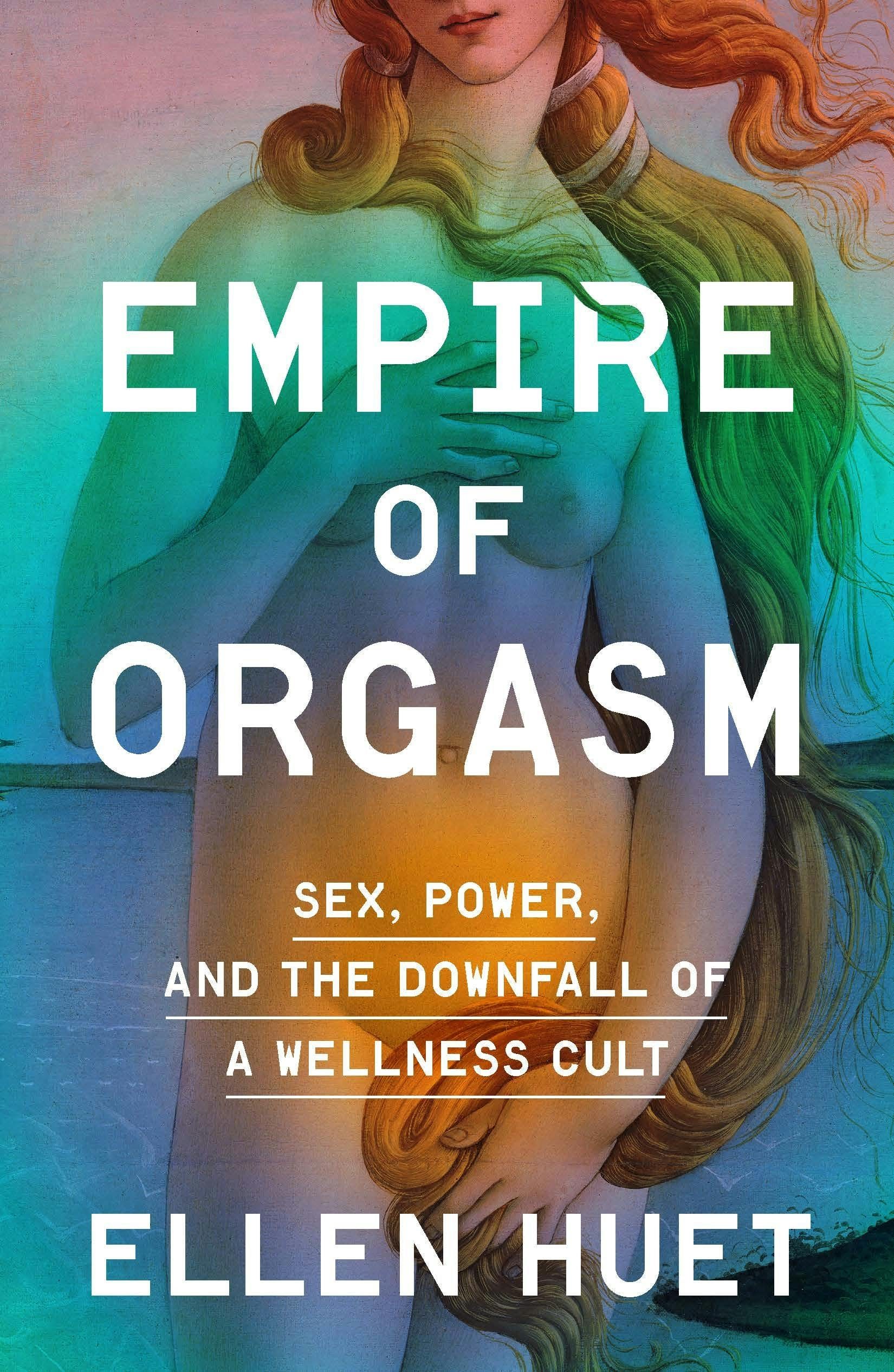
In my recent essay for The Baffler, I reviewed Ellen Huet’s book, Empire of Orgasm, which examines a sex cult centered on clitoral stimulation that went wrong. Amid growing allegations of sexual harassment and an FBI investigation, two of One Taste’s former leaders were convicted of exploitation and forced labor. Huet is thorough and balanced in her research, offering deep insight into tech nomadism, the vacuity of Silicon Valley, and the economy of desire.
Last year, I published A History of the World in Six Plagues. Please recommend the book to relatives, coworkers, pen pals, editors, or loved ones. You can also order the book at your local bookstore or library. Consider leaving a positive review of my book on Amazon, Bookshop, or Goodreads, or sharing positive thoughts about it on social media.

What I’ve Read
Thank you all for continuing to read and engage with Mobile Fragments by Edna Bonhomme. This post is free, but if you enjoyed reading this, please share this newsletter with your family, friends, and others who want to keep up with my meanderings. Please consider becoming a paid subscriber if you’d like. Your support is appreciated, whether you are a paid subscriber or not. I occasionally post on Bluesky and Instagram, so feel free to follow me if you’d like to hear more from me.
Your reflections reminded me of author and mother, Anne Boyers, "Garments Against Women" by "garments" she means "literature", and so the book’s title suggests that literature is against women, mothers, and more broadly, against many people writing within end-stage capitalist economies. Both your post and her memoir made me feel so seen.
You published I book that was among my 5 ⭐️ reads of 2025. 'In my book' that’s quite a remarkable feat 👏🏾!