
Working Mom
More than a mother and fine with being a stereotype

Lately, I’ve been feeling a bit burned out, which is common for mothers with young children who work outside the home. I’ve also realized that part of it is because my motherhood began amid chaos, like a storm crashing into my harbor. Eager to enter the world before his due date, my son arrived early, disrupting my grand plans. When I went into labor, I panicked and eventually contacted my editors to ask for extensions on my assignments. Luckily, the hospital had Wi-Fi and a desk where I could type—though the midwives jokingly said it was meant for eating, not my office. Lying in the warm comfort of post-partum bliss and the lingering effects of valium, I emailed my book editor, telling them I would be late with my response to the copyedits because I had just given birth. To my surprise, they congratulated me on this major milestone and extended my deadlines. The hormonal changes, alongside my son’s hospitalization during the early stage of life was emotionally taxing, but with time I learned to synchronize with his daily needs. For several weeks, I could just focus on the simple joys: holding this little one close to my chest, feeding him my milk, and adjusting to a new rhythm of bodily change that keeps shifting, like the high winds in the Florida Gulf.
I thought I would take a traditional maternity leave, one where I solely focused on changing my child’s diaper, reading to him, breastfeeding, and wiping his vomit off my chest. I believed I could fully let go and embrace one identity—being a mother. It felt tempting, like I could lean into a role others have played, perform the spectacle, until I realized I wasn’t like the others. Something was missing—mostly money, but also property. I understood that for mothers like me, who have to pay rent, utilities, a pension, and buy food, and who lack generational wealth, an allowance, or land, working outside the home wasn’t just a hobby but vital. What I’ve found is that domestic chores—most of which are unpaid—the cost of living (which keeps rising) and trying to be present with a curious child all take time and emotional regulation. The moments I feel happiest are when I’m well-rested, playing games with my child, or on an adventure with like-minded parents.
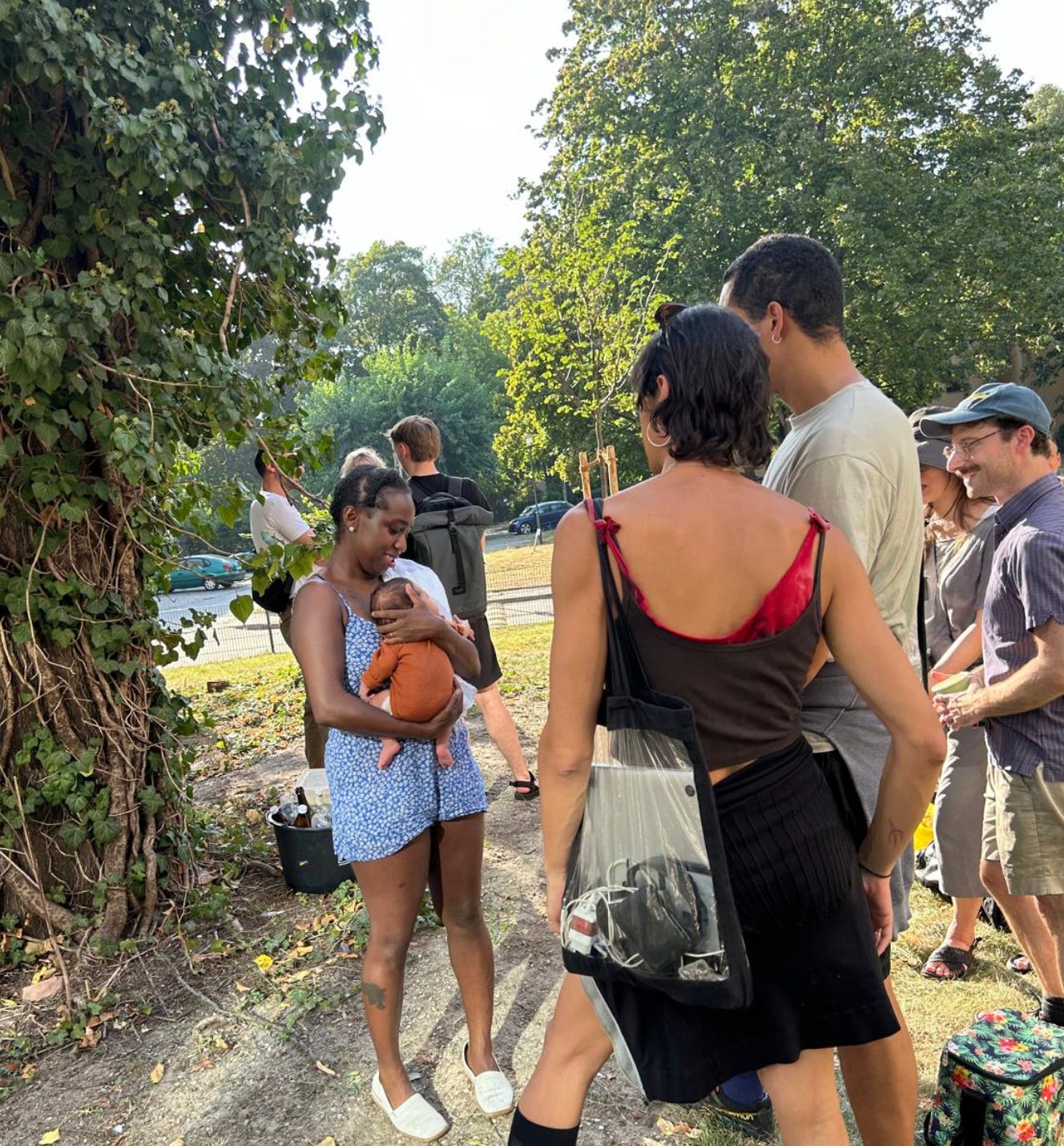
From the start, I read novels while my child slept on my chest, went to exhibition openings while he napped on me, and wrote with one hand while he tried to roll over. Eventually, when he was ten months old, he started kindergarten (aka Kita), which is free and universally accessible in Berlin. I didn’t have separation anxiety—I felt lighter. Over time, I noticed that the caregivers showed a calm patience with the other children that I could never replicate with more than two toddlers in one room. They sing songs, change diapers, and my child has made friends and his own language with some of his mates. I love sending him to Kita because he has been developing skills and socialization that I can’t provide, and yet, I’ve realized that not all mothers I meet feel the same way.
Some mothers believe that starting childcare before age 1 is too early. Others think that a child cannot receive the individual attention they need in group settings. Still, others feel that a paid carer (trained in childhood education) cannot be as attentive and compassionate as a biological family member. Those mothers are entitled to their opinions, and in many ways, the ability to act on these beliefs about early childhood care depends on the time and resources available to make these important decisions about what a child needs. But I realized something—these conversations often overlook an essential question: what does the mother truly want or need? What will make a mother happy? And what would it mean for a co-parent (if there is one) to be equally involved in child-rearing? How do class and wealth influence who stays at home and who goes to work? Of course, I can’t answer these questions for other families, but I did search for an author whose work best reflects the wide range of experiences of Black mothers, who adopt a different approach to parenting and childhood.
Recently, I listened to an interview with Jamilah Lemieux, author of the new book, Black.Single.Mother: Real Life Tales of Longing and Belonging. It is a collection of essays and interviews with Black single mothers who are unapologetic about raising their children alone, whether by circumstance or choice. Lemieux’s book grew out of an essay she wrote for Ebony Magazine in 2015, which explores how being a single Black mother can be challenging, but fulfilling. Her thoughts are raw, beautiful, and exactly the kind of reflections that resonated with me—partly because she says something I rarely hear from mothers who fully center their children. She writes: “I’m still Jamilah and I’m an awesome mommy with an awesome kid.” A mother doesn’t have to lose her identity when she has children, but so often the ways some mothers talk about their children and the holds they put on their lives make it feel as if they are no longer their former selves.
Growing up, I was told that being a single mother and Black was difficult, and that the nuclear family was the ideal. For those of us who are descendants of slaves, non-marital co-parenting has been a vital part of our survival, especially considering that European enslavers often separated African-descended women from their children. The logic was that the children were the enslaver’s property. Because of this, many enslaved people relied on surrogate mothers, cousins, aunties, or compassionate neighbors—most likely Black—to care for children. Even after chattel slavery, the extended family and “fictive kin”—non-relatives considered part of the family system—continue to shape Black communities. Two years ago, while I was pregnant, two of my “cousins” and I discovered we were not biologically related while reviewing our family trees. And we were fine with that. One of those cousins, a Black single mother, was thriving in her career and in her parenting.
The history and stereotype were far more complex than what I assumed, yet statistics show that Black mothers are different. According to the Center for American Progress, about 47% of Black mothers in the United States are single mothers. This is the highest rate among major racial and ethnic groups, compared to 25% of Hispanic mothers, 14% of white mothers, and 8% of Asian mothers. Black American women are disproportionately single mothers. But that isn’t necessarily a bad thing.
Since becoming a parent, I have formed or strengthened friendships with some single mothers. Each has different circumstances that led to their situation, and most are happy with their choice. Single mothers who have access to free childcare through the state, friendship networks, or extended family can lead fulfilling lives. When financial support is available without conflict or conditions, that mother may be able to provide the warmth they deserve. Beyond that, when childfree people and other parents treat single mothers as whole individuals rather than social pariahs, they can also build loving families.
As cliché as it sounds, my child continues to inspire me with his wit, confidence, and tenacity. Somehow, he manages to teach me to be softer and more compassionate, even as I feel rattled by the rightward shift in the world. He’s been to several protests; his Irish “aunty” gifted him a keffiyeh; he has books about Black revolutionaries; and I’m teaching him my mother’s tongue, even if there are few people around us who speak it. I mostly work “outside the home” out of necessity, but now I am also reimagining what it means to work alongside him, as I did in the early days, through a process of self-discovery and experimentation. Hopefully, he can teach me to slow down a bit, and maybe one day, I won’t be so burned out.
Some Announcements
My second nonfiction book, Tending to Our Wounds (Haymarket Books), will be published on July 21, 2026, in the US and the UK. The book is both a diasporic and historical memoir, a history of Miami, New York City, Berlin, Port-au-Prince, Cairo, and me. It traces how the cities I have lived in have treated Black people from the Enlightenment to the present, shedding light on how communities resist the weight of centuries of history. Whether examining debt, medical racism, art, or reparations, this book is a course between the past and the present, the individual and the collective, identifying the tendrils of history in the everyday and outlining a path to real freedom.
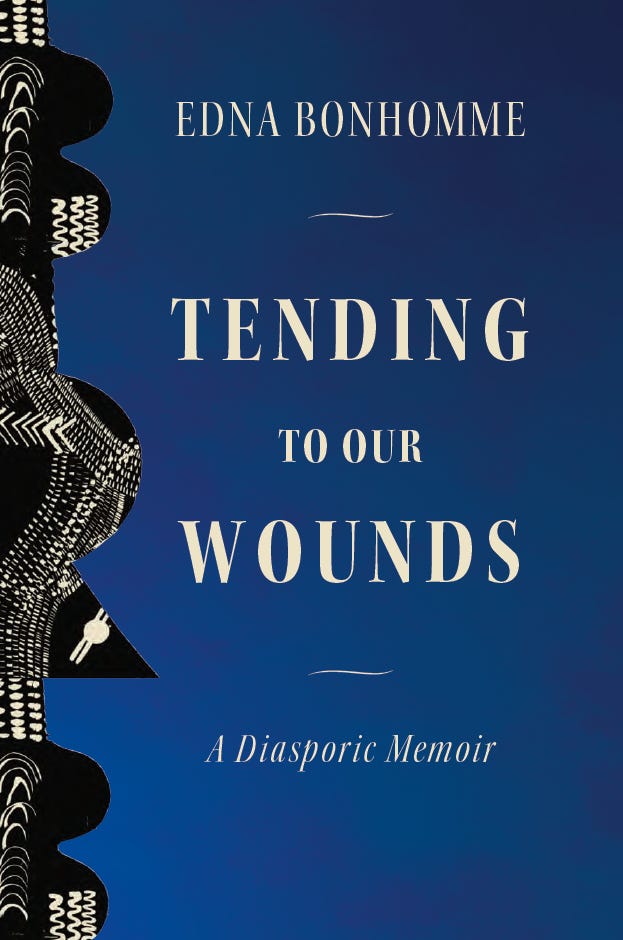
I would appreciate your help in spreading the word, generating early sales, and letting people know about the book. Here are several things you can do.
You can preorder my book here. You can also ask at your local bookstore or your favorite online retailer to pre-order it.
For those who write for magazines or newspapers, please pitch your editor or a colleague on writing a book review. If you would like a review copy, please get in touch with Katy O’Donnell at Haymarket Books, katy@haymarketbooks.org , for the hard copy galley, or e-mail me for the PDF galley
I would love to make a guest appearance or be interviewed on your podcast or radio show. I can do recordings before or after the March 2025 publication date.
I would love to participate in (virtual) conversations with public libraries, labor unions, art spaces, museums, or universities. However, I can also hold in-person events in European cities reachable by train from Berlin. Let me know if you have ideas on this front.
In the meantime, I would be so grateful if you could recommend the book to people in your life. You can promote the book on social media and Goodreads, include it in newsletters, nominate me for a prize, etc.
As some of you may know, A History of the World in Six Plagues is now out in paperback. Please consider leaving a positive review of my book on Amazon, Bookshop, and Goodreads or sharing your thoughts about it on social media. You can purchase the book directly through the North American, British, and German publishers.
Some Reads
Earlier this month, my review of Namwali Serpell’s latest book, On Morrison, was published in The New Republic. Serpell is such a brilliant scholar and thinker whose humor leaps off the page. In case you haven’t gathered, like Morrison, I have been called difficult. I have also been told that I am stubborn, uncaring, irrational, cold, unreasonable, and a cunt—all by white men in the past couple of years. Difficulty seems to be my mantra. Beyond my appreciation for the opportunity to read and write professionally, I am inspired by the group of friends I have in Berlin who think alongside me. The last scene I set in the essay mentions a circle of friends who not only discussed literature that night but also cohabitation, open relationships, and the ancestors.
I also had the pleasure of interviewing choreographer and dancer Ligia Lewis for The Diasporist about her exhibition at the Gropius Bau, her reading, and her use of sarcasm. The Berlin-based artist has been performing throughout Europe, so if she happens to pass through your city, I highly recommend seeing her.
Some Recommendations
Caitlin Chandler, War in a Box
Kaitlyn Greenridge, Writing Through It
Lex McMenamin, Say Gay
Yoko Ogawa, The Memory Police
Helen Shaw, The 2,500-Year-Old Greek Heroine Whose Story Never Gets Old
Thank you all for continuing to read and engage with Mobile Fragments by Edna Bonhomme. This post is free, but if you enjoyed reading this, please share this newsletter with your family, friends, and others who want to keep up with my meanderings. Please consider becoming a paid subscriber if you’d like. Your support is appreciated, whether you are a paid subscriber or not. I occasionally post on Bluesky and Instagram, so feel free to follow me if you’d like to hear more from me.