
Bad Ballerina
Notes on my multi-decade relationship to dancing with grace

1. Several years ago, I was anguished by the feeling that my body denied me the right to bear a child. With a bit of grace and sincerity, my friend Charmaine suggested I attend the ballet class she regularly joined. At first, I was reticent, not because I was unfamiliar with the dance, but because I knew it required my legs to bow tenderly with each squat and my head to remain upright, with an alignment stiffer than a board. During our first session together, we began the class with the port de bras, that is, stretching our midsection forward. Simple and discreet. Yet as the class continued, a saline pool began to form near my feet. Fifty minutes into the class, all I could remember was how much my core muscles labored against our instructor’s task to remain still. With two minutes left, Charmaine and I placed our bums on the mat and held our hands and legs up. We did our best to keep our limbs inert, for our whole bodies were shaking like a rattle, the wells of our abdomen were grumbling like an earthquake, and with each breath, the mounds, at least for a moment, were refined, then stirred, pleading that we cut off this torture. For every tendu, a slow slide of the foot that felt like a more polished, gentler form of the electric slide, I drank a sip of water. For every plié, I was reminded of how off-center my body was. This is when I knew I was a bad ballerina, and who better to share this experience with than my friend.
2. The first time I did ballet was when I was ten years old in Miami. It was a free after-school course at my elementary school for students whose parents were working late. The other options—Girl Scouts and cheerleading—didn’t appeal to me. There was something about being on stage—which I dreaded, and, possibly, being thrown in the air—which I desired. Ballet was more appealing than being a young entrepreneur selling cookies or praising others for their sportsmanship. The body suits, with their neon greens and cavernous crimson, beguiled my appetite. I was obsessed with different variations of sautés, where I would prance with one foot in the air, hand extended to the heavens, with intention. Somehow, I felt elegant and regal, knowing I could bend the knee like a jelly straw. But even in my adolescence, I exercised some faculties and realized that opening up my hips for a side split was not a natural position for me. I had the peasant body of a peanut farmer meant to remain closer to the Earth, picking crops. Still, I thought I could transform from a rotund berry into a sugar cane stalk. A year of practicing didn’t change my form. Like many things to come, I gave up ballet without any resolve.
3. Saying that ballet is a comedic sport is not far off; it is a discipline that also invites jocular critique. My current ballet teacher, L, is French, which means she not only points out our faults wryly but also gets us to laugh at ourselves. Her patronization is welcome because she is morally superior in ballet, both in movement, intelligence, and taste. During one routine, she instructed us to begin in fourth position with a demi-pointe, with one foot supported on the knee and the other on the floor. From there, we were instructed to perform about 6 pirouettes to Beyoncé’s “Break My Soul” while remaining upright, balanced, and controlled. Some of us had not mastered keeping our gaze fixed on one point to prevent dizziness. I was one of those fools and found the room spinning, leaving me off balance, and thought: Did she want to break our souls?
4. Leaping is a central feature of ballet. It is one way to pantomime a story and to represent the characters’ passions and gestures on stage. The etymology of the word ballet derives from the Latin ballare, meaning to dance, and the Greek ballizein, meaning to jump about. It goes without saying that a ballet performance with an ostentatious jumping sequence can feel dull.
5. After our ballet sessions, Charmaine and I like to gossip like schoolgirls—rather, we take the time to wriggle about our solemn states and disengage from formality. There is gossip that decays the soul when handled sloppily, and there is a light gossip that flutters in the air like a saccharine tune. As writers, we wanted to step outside our heads and use our bodies in ways that defied the erudition we normally forced upon ourselves. If, as Socrates once said, “Small minds discuss people,” our post-ballet sessions made us miniature gnomes. We wanted to absolve ourselves of what we were expected to be—sensible, yet ineffable—and instead lower ourselves to basic human responses, which was fun and proof that snaring at the trivial could also loosen our spirits.
6. In a 2020 study by researchers at the University of Chieti-Pescara in Italy, scientists found that the average ballet dancer had a body fat of 15.92%, whereas the general population has an average of 18-25%. Given the demanding training, which requires endurance, flexibility, and agility, many young ballet dancers maintain a lean physique. However, researchers believe that low energy intake could lead to vitamin deficiency among some adolescent ballet dancers.
7. The first time I watched a live professional ballet performance was in the spring of 2000, when I was a teenager during my brief residence in Belarus. During my student exchange program at the Lyceum in Minsk, my host family—which comprised an engineering professor, a housewife, and a son—offered me a life I didn’t have in Miami—access to rich cultural offerings, such as classical ballet and opera performances. Located in the Trinity Hill district of Minsk, the “Opera and Ballet Theatre” is admired by the cultural elites of the Eastern European country for its urban aestheticism. When I saw the dancers at the National Academic Bolshoi Opera and Ballet Theatre in Minsk, I was taken aback by the visual décor of their sinuous glissade, which was ecclesiastical in form. Their petite torsos were regal, and their circling gestures made them seem like masters of their bodies. No one could deny the audience’s serious admiration and pride for these Belarusian dancers. At one point, my host father teared up, and I followed suit, causing a droplet to hang and slowly glide down my lower eyelid. When the dancers finished their performance, the audience began a rhythmic clap that roared through the hall. For the Belarusians, its unison pulse was a swooning stream, meant to honor the dancers’ theatricality. For me, it felt both like a corny relish or a domineering directive from government authorities.
8. In 2025, 33 ballet companies participated in World Ballet Day, including Miami City Ballet, based in my hometown of Miami. There weren’t any African ballet companies on the list.
9. I began intravenous fertilization in the spring of 2020, unaware that the hormonal injections would engulf me in self-abasement. After each injection into my plump abdomen, I often felt tired and bloated. Later, I read that my body was undergoing inflammation, the kind that disrupts one’s metabolism. Other symptoms included mood swings, frequent urination, cramping, and constipation. Worse, the hormones from IVF can complicate a person’s pregnancy and contribute to adverse fetal outcomes. More than my desire to forget that I was losing control over my body and consistently failing to get pregnant, ballet was something else to do. I didn’t have a major performance, and outside the studio, no one cared whether I was circumventing the beat to Molière’s Les Amants magnifiques. Perhaps, though, the unintended consequence of dancing is to become a different kind of sexual being, beyond the delicate balance of coitus climax or reproduction, merely appearing slick and sophisticated. I was just another failing ballet student, marginally improving my posture. But ultimately, I was having fun with my friend. For many people, IVF has become a way to defy nature and create kin when there might have been none. Even when we hope, IVF slaps you in the face.
10. Lately, I’ve considered how average I am and how, like so many others, I’ve fully invested in fitness culture, especially the cliché that “exercise brings me joy.” Ballet, especially when pursued through gym memberships like mine, is part of a multi-billion-dollar fitness industry. In Germany, the fitness industry generates 5.4 billion euros in revenue; in the United States, it generates 45.7 billion dollars. Over the past several years, America has become obsessed with GLP-1 drugs, leading some to refer to the country as the United States of Ozempic. As the drugs become more affordable and accessible, the exercise- and diet-driven body changes tied to fitness culture might change. Still, some gym bros are eagerly integrating GLP-1 substances into their weight-loss routines. While the ballet class falls within the ways people try to modify themselves, it also has a sentimental layer for me. The allure of repetition and my unrepentant reflection of the younger self: the discipline of repeating a task until I became better; the sense of gradual improvement that is missing from other parts of my life.
11. Ballet, like the internet, is constantly evolving, though it is rare to see it unfold in real time. The first ballet performance, ‘Ballet des Polonais,’ was commissioned by Catherine de’ Medici in 1573, with sixteen dancers twisting, turning, and mingling to celebrate the election of Henry of Anjou as King of Poland. During the fifteenth century, ballet de cour originated in the courts of Paris and Italy. The dancers were comedian-actors, whose role was to use any device they could to entertain while also enacting sleek fantasies. From 1664 to 1671, the collaboration among Molière, Lully, and the choreographer Pierre Beauchamps produced eleven comédie-ballets and a tragédie-ballet (Psyché), commissioned for court festivities and entertainment and later performed at the Théâtre du Palais-Royal for the Parisian public. The first professional theatrical ballet company, the Paris Opera Ballet, was founded in 1669. Today, the company employs 154 dancers, and the average age is 25—a fact that reveals I am too old and rotund to be employed by the company.
12. In Germany, Black ballerinas are an oxymoron. When Chloé Lopes Gomes became the first Black female dancer at the Staatsballet in 2018, she alleges she was told to wear a white veil for a performance of Swan Lake. According to Lopes Gomes, she was told that her skin color wasn’t aesthetically acceptable alongside the white dancers. If, as Peter Tchaikovsky meant, the significance of Swan Lake isn’t about the visuals but the soundtrack, which conveys a shifting dynamic between the prophetic decline of empire and the decadence of the ball scenes, Lopes Gomes’s complexion should not have been a factor in telling the story of love and betrayal.
13. If an adult wants to take a community ballet class in New York City, they can pay $375 for a five-month course. In contrast, the starting tuition for the Girls I ballet course at the School of American Ballet is $4,350.
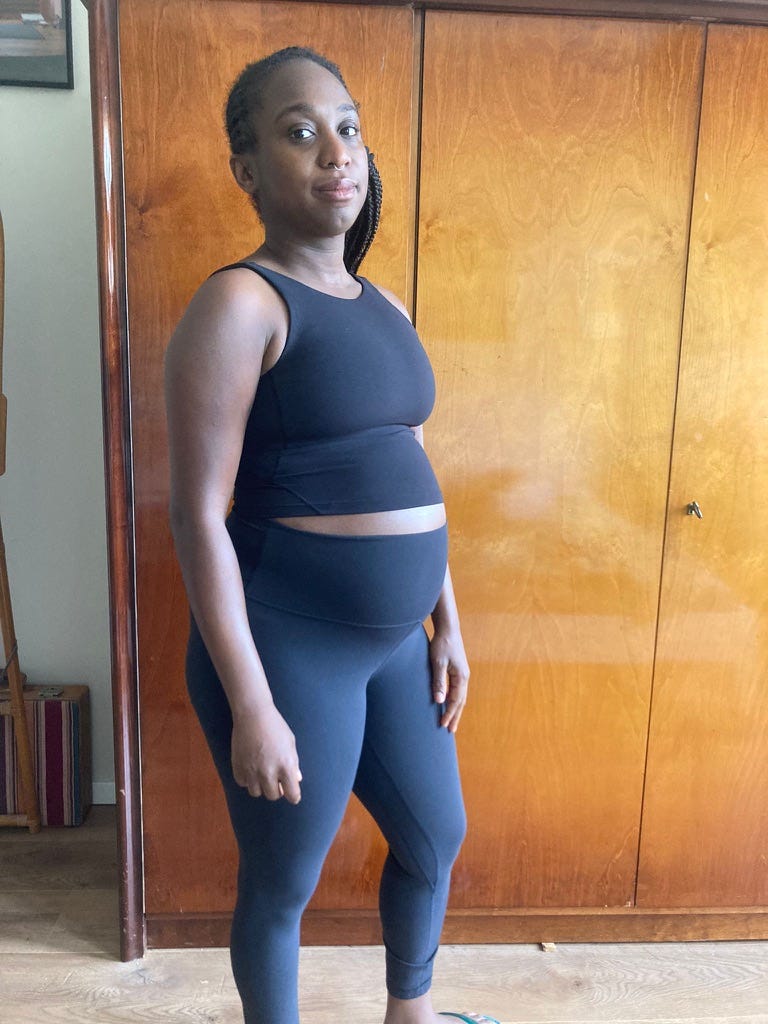
14. When I was pregnant, I continued attending my ballet class; the baby bump added a new layer, a challenge that was glaring. Researchers at the Francis Crick Institute found that pregnancy leads to a permanent rewiring of neurons, coinciding with changes in a pregnant person’s brain volume and activity, even well after giving birth. They found that these changes create a behavioral shift, with pregnant people suddenly showing interest in young animals of their species, which they believe is triggered by oxytocin. To be clear, you don’t get more or less brainy – rather, hormonal changes prime the brain to respond to infant needs as soon as the baby is born. Since pregnancy, my sense of hearing, taste, and smell have been enhanced. According to these researchers, those traits will help me protect my child. During the nights when I am awoken by his cries, I wish that I hadn’t suddenly become superhuman.
15. In Life in Moton, the American ballet dancer Misty Copeland describes the first time she performed as the principal character in Igor Stravinsky’s L’Oiseau de feu (The Firebird). She was the first Black woman to become a principal dancer at the American Ballet Theatre. Before beginning her performance in Firebird, she discussed her metamorphosis:
“I realize in that moment that it doesn’t matter what I do on the stage tonight. They are all here for me, with me, here for who I am and what tonight represents. I run onto the stage and feel myself transform. As I approach center, my flock parts, leaving me to stand alone. There’s a brief second of silence before the audience erupts into applause once more, clapping so loudly I can barely hear the music.”
For anyone who has seen Copeland’s performance, it will be clear that her jumps are blazing, undulating like the rippling flanks of a sprightly bird. She has overtaken the stage as she lurches across it.
16. During Jim Crow segregation, Black girls couldn’t take ballet classes with white girls. That didn’t stop Janet Collins. Because she was African American, she couldn’t take group ballet lessons, so she opted for private lessons. With talent and grit, she became the first African American prima ballerina. In 1932, when she was fifteen, she auditioned for the Ballet Russe de Monte Carlo. Like Lopes Gomes, the director told her to whiten her face, and, with a quiet protest, she refused to dance with the company. She eventually joined Katherine Dunham’s dance company.
17. When my child turned one, I returned to ballet class. This time, to another studio and on my own. Dressed in leopard tights, I stood firmly on my heels until I could no longer stand. For a minute, I leaned against the bar, resting my hand on my hips. Everything hurt: my toes, my elbows, but most of all my right ankle. Yet again, my body was different, though the change was even more noticeable than the bodily transformation from puberty adulthood, something else was happening. In her 2024 book, Matrascence, the science journalist Lucy Jones described the existential queries that drove early motherhood. She opined: “It tested my empathy to the limit, it challenged me intellectually, it required me to answer and ask questions constantly, to consider metaphysics and the origins of matter.” Unlike Jones, I didn’t consider the origins of matter, but the fragile state of my figure. With billowing hips and fragile knees, my body performs ballet differently now than it did when I was ten. As my shirt rose, my scars were muttering, “Idiot.”
18. At the beginning of my second trimester, I thought I had a miscarriage. After my partner suggested we clean the flat, I reluctantly grabbed our vacuum cleaner and headed to the bathroom to extract the dust and hairballs that littered the tiled floor. After five minutes, I felt a scurry of liquid trickling down my underpants, and within seconds, I could smell the stench of my uterine gore. The pungent droppings and blood clots plunged from my vagina. Although I was convinced I was no longer pregnant, my partner insisted we go to the hospital. Given that it was a Sunday and I had no plans, I decided to go. After an hour of waiting in the emergency room, a physician finally saw me. He placed a cool gel on my belly and used the ultrasound to monitor my abdominal activity. The three of us heard a heartbeat. My partner cried, while I lay momentarily paralyzed, realizing how little I knew about pregnancy. The doctor indicated that the bleeding was due to a subchorionic hematoma—a blood collection most likely due to disease or trauma. When I asked why this was happening, he told me that approximately 20% of pregnant people develop a hematoma at some point, and that, given my cleaning and intense exercise, the seeping blood was probably due to strenuous activity. That’s when I quit ballet for a second time.
19. In January 2026, Charmaine and I attended our first joint ballet class of the year. We were the first to arrive, well before the teacher. After we greeted each other with a hug, we stood in the cold, talking about our winter holiday as small, transparent clouds left our mouths. With each elongation, our lips trembled. When L arrived, she unlocked the door, and a small flood of students climbed the steps, unwrapping us from our winter bulwark of cashmere, fleece, and flannel. Before we began, I noticed bits of snow resting on the rooftop of the building opposite the studio, giving the industrial building a special, chic appeal. Our instructor’s tardiness didn’t stop her from taking pleasure in our suffering. Like clockwork, we did barre. For ten minutes, a yoga block became my nemesis. On our mats, we positioned it between our feet and held our legs high for a minute, paused, then held them high for another minute. We repeated this for another five minutes. After this, we stood, and things became especially frustrating. Using the bar, we did a glissade—jumping in the air and landing in fifth position—sixteen times. One male student asked if we could rest. L laughed. In every move, I tried my best, even if I knew I was delivering a poor jump. I kept thinking maybe this would resemble the coming year—overstraining and a poor landing. After we finished our class, Charmaine and I tried to get a bagel, but the new joint was packed, so we opted for the more delicious offering, a sweeter pastry from the artisanal donut shop. I had a Boston Crème, and Charmaine ate a hazelnut donut. That day, we didn’t gossip; instead, we reflected on the rugged state of the world.
20. As I age, exercise dates have become a way for me to bond with some friends. I’ve done spinning classes with Nathan or bootcamp with Yaniya, but ballet with Charmaine has been the one that sticks. More than that, it is the physical activity that pushes me to my limits in every capacity, from the period when my body felt like a failure to this drawn-out postpartum recovery. Each class leaves me exhausted and humbled. But over time, the movement has become an opportunity to strengthen my core, loosen my muscles, or simply remain stationary in ways that challenge my persistent sense of ongoing failure. Beyond that, sharing these rituals of being a bad ballerina with my friend has allowed us to bond over life and mutual setbacks. As I moved from a place where I was labeled infertile to becoming pregnant, ballet continued to be part of how I learned to reckon with the rhythm of parenting—a repetition of routines, each demanding that I bend and acclimate to a new dance. Now, nearly two years after giving birth, ballet still reveals my limits, but I do it for myself, even if I know I am barely improving at plié, tendu, relevé, or pirouette.
A Read
I wrote a piece for the London Review of Books that discusses recent measles and meningitis outbreaks, how they relate to the rise of vaccine hesitancy among a small section of parents in the United Kingdom and the United States, and what they say about solidarity. Here’s a short excerpt:

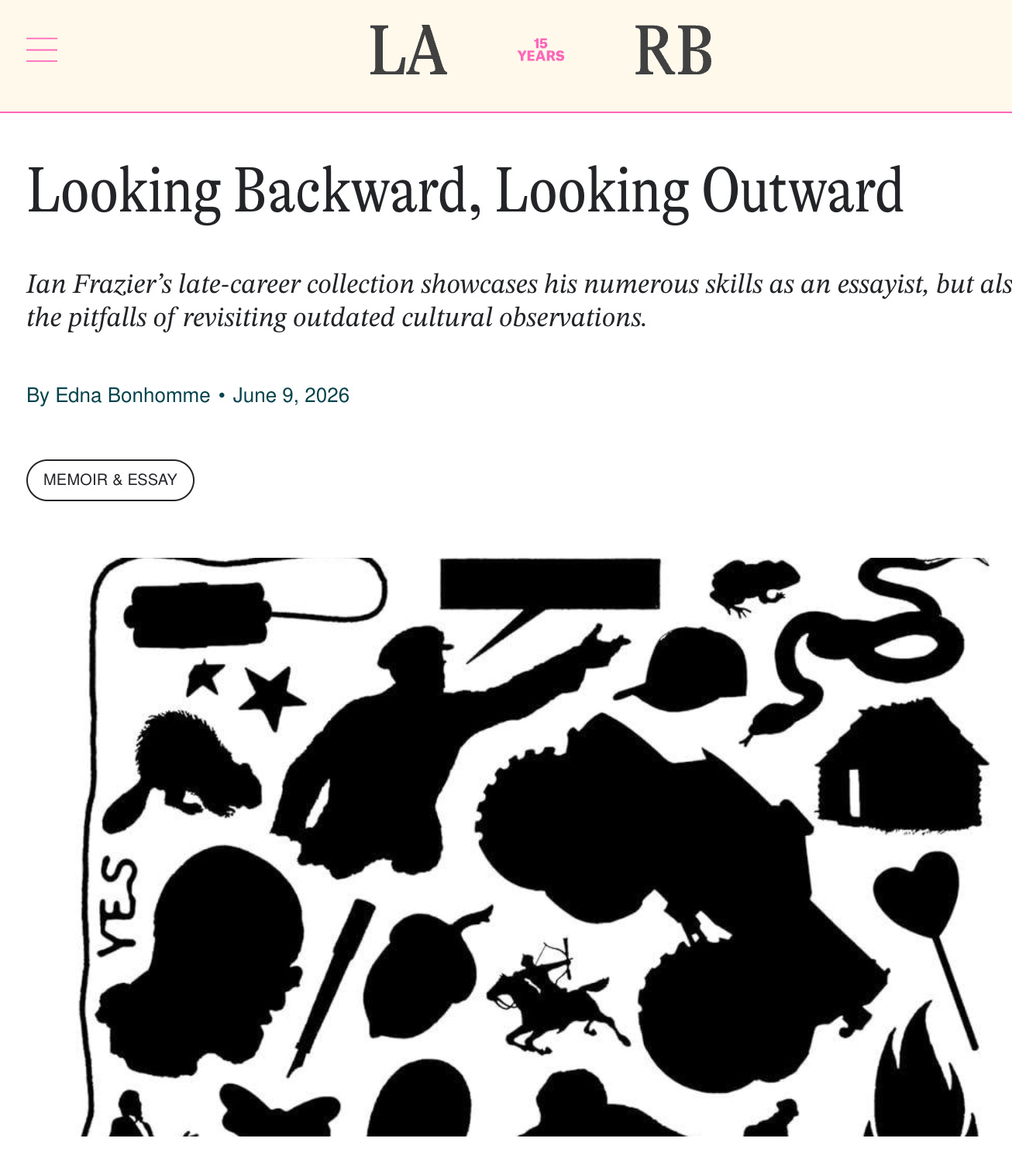
Additionally, I wrote two book reviews for two literary publications in different parts of the world. For Berlin Review, I reviewed Cristina Rivera Garza’s book, Autobiography of Cotton, an intimate account of early-twentieth-century Mexican history, farmer strikes, and the border today. For the Los Angeles Review of Books, I express my admiration of Ian Frazier’s book of essays, The Snakes That Ate Florida.
A Book
My next book, Tending to Our Wounds, will be published in three weeks. Please consider leaving a positive review of my book on Amazon, Bookshop, or Goodreads, or sharing your thoughts on social media, or recommending the book to relatives, coworkers, pen pals, editors, or loved ones.

Thank you for continuing to read and engage with Mobile Fragments by Edna Bonhomme. This post is free, but if you enjoyed reading this, please share this newsletter with your family, friends, and others who want to keep up with my meanderings. Please consider becoming a paid subscriber if you’d like. Your support is appreciated, whether you are a paid subscriber or not. I occasionally post on Bluesky, Instagram, and Twitter, so feel free to follow me if you’d like to hear more from me.